
09 / Kids Martial Arts · San Gabriel, CA
MY CHILD DOESN'T LIKE TEAM SPORTS. COULD MARTIAL ARTS BE WORTH TRYING?
A calm decision guide for San Gabriel parents who want to explore a different kind of activity—without assuming one format is right for every child.
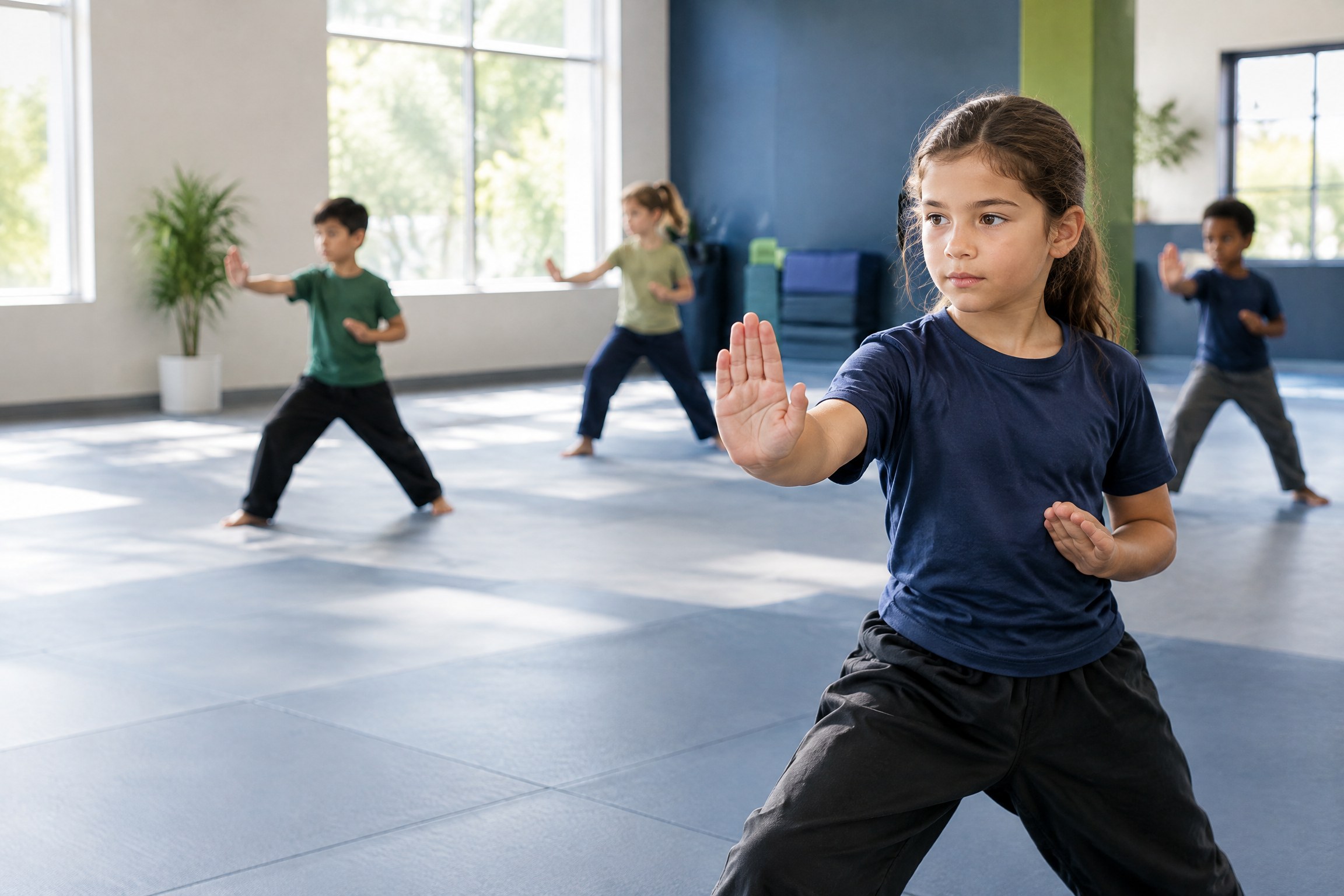
A different activity can be worth a thoughtful look.
The question is not whether one sport is universally better. It is whether the current class format gives your child a setting they want to explore.
The short version
MARTIAL ARTS IS NOT A FIX FOR DISLIKING TEAM SPORTS—BUT A FIRST CLASS CAN BE USEFUL INFORMATION.
Some children enjoy a setting that emphasizes individual skill practice inside a group. Others may still prefer a team, a different activity, or no new activity right now. A first visit can help your family observe the format before making a bigger decision.
Start with the child, not the label
NOT LIKING TEAM SPORTS DOES NOT MEAN A CHILD IS “NOT SPORTY.”
A child may dislike the social pressure, game structure, speed, competition, or unfamiliarity of one team experience. That does not tell you everything about what they may enjoy next. Instead of trying to find the “best” sport, begin with a smaller question: What kind of setting might help my child feel comfortable enough to explore a new skill?
The American Academy of Pediatrics notes that sports readiness includes physical, mental, and social skills, and that children develop at different rates. For ages 6–9, it lists martial arts among activities that can be adapted at a basic level, while noting that complex teamwork and strategies may still be difficult for some children.[1] This is not a diagnosis or a rule. It is a useful reminder to match the activity and instruction to the child in front of you.
Compare the format—not the child
A MARTIAL ARTS CLASS CAN FEEL DIFFERENT FROM A TEAM GAME.
In many youth martial arts settings, children learn a shared lesson while practicing their own stance, balance, form, or sequence. That can feel different from tracking a ball, waiting for a play, or coordinating a position with a team. It does not make martial arts automatically calmer, easier, or better—it simply gives families another format to evaluate.
The AAP recommends that youth sports emphasize learning skills, personal involvement, variety, success, and fun rather than winning. It also encourages parents to check out a program before joining and look for signs that children are having fun.[1] A first class is a practical way to see how those ideas look in a real room.
The CDC encourages children ages 6–17 to take part in age-appropriate activities they enjoy. One martial arts class is not meant to meet every movement need by itself; it can be one option in a varied weekly routine.[2]
Bring this to a first visit
A FOUR-POINT COMPARISON CARD FOR PARENTS.
Use these observations to learn about the current class—not to judge your child. The goal is to leave with better questions and a more grounded next step.
Notice whether a beginner can work on one movement at a time and receive a clear next cue, without needing to compare themselves to teammates or a scoreboard.
Listen for short, understandable directions and demonstrations. Your child does not need to master a move on the spot; you are looking for a teaching style they can follow.
A group class can still be a good fit for a child who does not enjoy team sports. Watch whether students have room to work individually while being treated with respect by peers and adults.
Ask what the first classes focus on and how new students are supervised. Get the school’s current answer rather than assuming every martial arts program works the same way.
At Ideal Martial Arts, the public site lists Kids Martial Arts for ages 7–11. Ask the school about the current age grouping, beginner format, and available weekday times instead of relying on a generic description or an old schedule.
Ask about beginner safety
THE FIRST QUESTION IS HOW NEW STUDENTS ARE INTRODUCED.
The American Academy of Pediatrics recommends that students beginning martial arts focus on non-contact form and skill development before sparring or contact is considered.[3] Families should ask the school how that principle appears in its current beginner classes rather than assuming every martial arts program uses the same progression.
It is also reasonable to ask how a youth activity prepares staff, supervises children, communicates respectful-treatment expectations, and handles concerns. The U.S. Center for SafeSport presents those as useful questions for parents evaluating youth settings. Its checklist is camp-focused, so use it as a general safety lens—not as a claim about any particular school.[4]
Keep the decision low pressure
FOUR QUESTIONS TO ASK BEFORE YOU DECIDE ANYTHING LONGER TERM.
Which current Kids Martial Arts class is closest to a 7–11-year-old who is new to martial arts?
How do you introduce a beginner who wants to learn at a quieter or more personal pace?
What does the first class focus on before any sparring or contact is considered?
How are students supervised, and how can a parent ask a question or raise a concern?
After the visit, a child does not need to give a perfect answer. You can simply ask what felt interesting, confusing, comfortable, or uncomfortable. That conversation is more useful than trying to decide in advance whether martial arts will be the “right” activity forever.
See the format in person
BOOK A FREE CLASS—THEN DECIDE WITH MORE CONTEXT.
Choose a current available time, meet the team, and use the visit to see whether the instruction, group feel, and beginner pace make sense for your family.
BOOK A FREE CLASSArticle references
SOURCES
- [1] American Academy of Pediatrics / HealthyChildren, Is Your Child Ready for Sports?, updated June 28, 2024.
- [2] Centers for Disease Control and Prevention, Child Activity: An Overview, reviewed December 4, 2025.
- [3] American Academy of Pediatrics / HealthyChildren, Martial Arts for Kids: A Parent's Guide, updated May 16, 2025.
- [4] U.S. Center for SafeSport, To Assess Camp Safety This Summer, Ask the Right Questions.